Refreshing the latest version...
Refreshing the latest version...
Published: Nov 1, 2026, 12:00 AM
Read Time: 3 min
0:00
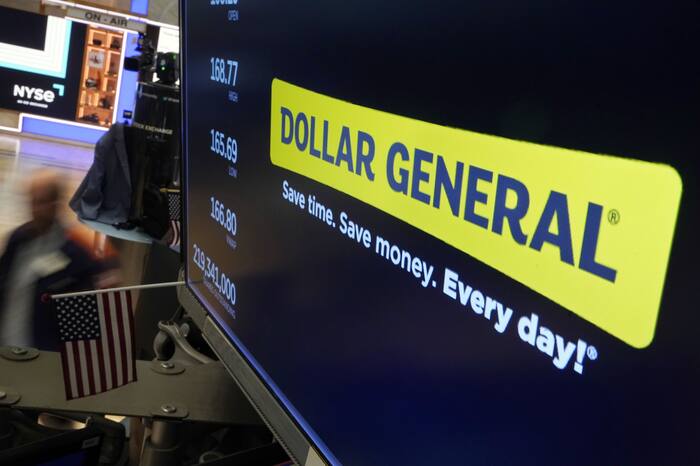
FILE - The logo for Dollar General appears on a screen above a trading post on the floor of the New York Stock Exchange, July 13, 2023. (AP Photo/Richard Drew, File)
What to know:
Michigan and 19 other states, alongside the FTC, sued Dollar General, alleging it charged customers more at checkout than advertised.
The complaint says stores repeatedly mislabeled prices or failed to honor them, despite years of complaints and the company’s knowledge of the problem.
Officials allege the practices generated millions of dollars and harmed shoppers, including lower-income households that account for about 60% of Dollar General’s revenue.
Dollar General operates more than 20,000 stores nationwide and has not commented on the lawsuit, filed in federal court in Tennessee.
Michigan, along with 19 other states and the Federal Trade Commission (FTC), is suing discount retail chain Dollar General for allegedly charging customers more at the register than the prices it advertises.
The lawsuit, filed on Monday by Michigan Attorney General Dana Nessel, claims the company has generated millions of dollars through its deceptive pricing practices.
“Consumers everywhere deserve to be treated with respect in any store where they choose to spend their money,” Nessel said in a news release this week. “That is the guiding principle behind the Michigan Consumer Protection Act, and many other state and federal laws.”
Thousands of Dollar General stores have participated in the overcharging scheme for years by repeatedly mislabeling prices or failing to honor advertised prices, according to Nessel.
Despite “extensive corporate knowledge of the problem” and receiving tens of thousands of customer complaints, Dollar General has yet to implement policies and practices to adequately address it, the complaint alleges.
According to the company’s CEO, Dollar General is “uniquely positioned to serve underserved customers in rural communities.” Describing itself as “America’s neighborhood general store,” the company operates more than 20,000 stores nationwide and markets itself as an accessible, low-priced alternative to large discount and big-box retailers.
Households earning $35,000 or less represent approximately 60% of the company’s total revenue, the lawsuit says.
“I appreciate the efforts of the FTC and other states on this far-reaching investigation, and together we can put an end to these deceptive practices and restore some truth in pricing across the country,” Nessel said.
Other states participating in the lawsuit — filed in the U.S. District Court for the Middle District of Tennessee — include Alabama, Arizona, Arkansas, California, Connecticut, Florida, Illinois, Iowa, Kansas, Louisiana, Mississippi, Nebraska, New Jersey, North Carolina, Ohio, Oklahoma, Tennessee, Utah and Wisconsin.
Dollar General has not commented on the complaint, which you can read here.