
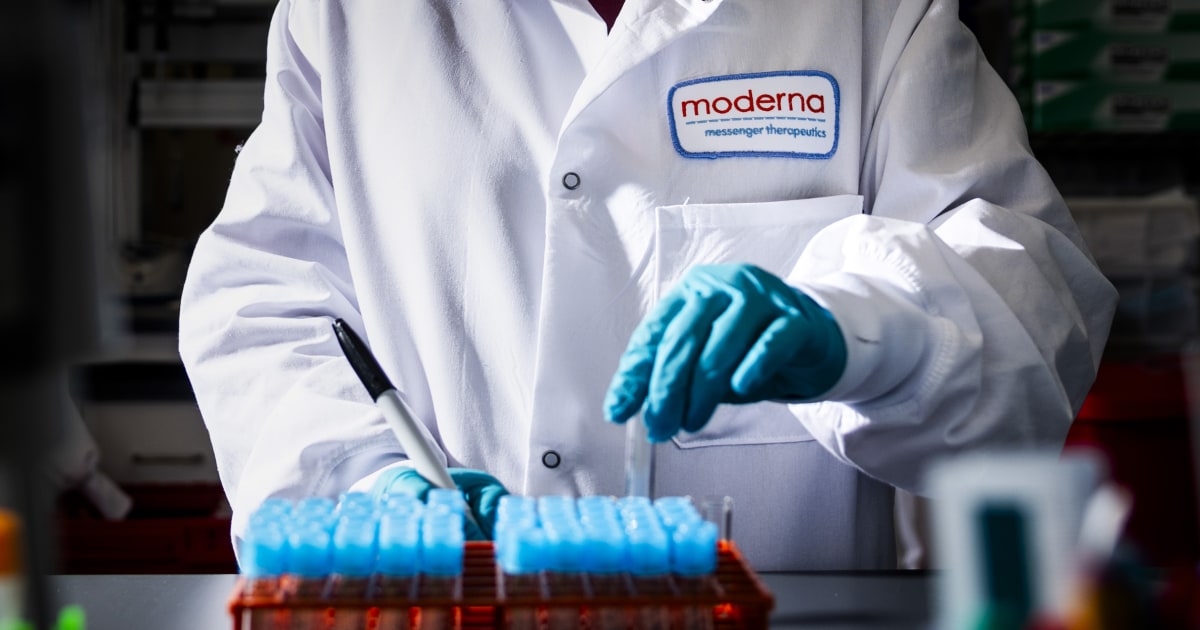
Pharmaceutical giants Moderna and Merck said Wednesday that an experimental vaccine treatment has shown signs of preventing cancer from returning or spreading in a study of high-risk melanoma patients.
The companies have not published their results in a peer-reviewed journal or released the new data, saying instead that they will be presented at an upcoming medical meeting and shared with regulators.
According to a news release, the mRNA-based vaccine was tested in a late-stage trial involving people who’d already had surgery to remove a melanoma, the deadliest form of skin cancer. The study involved a personalized cancer vaccine called Intismeran, produced by Merck and Moderna, administered in combination with Merck’s cancer immunotherapy Keytruda.
Interim results from the trial show that the vaccine-drug combo appeared to extend the time before cancer returned in high-risk patients, according to the release, though the companies did not say for how long.
In June, Merck and Moderna presented research on the experimental melanoma vaccine at the American Society of Clinical Oncology’s annual meeting, saying at the time that it halved the risk of melanoma returning after five years in a group of 157 patients. Side effects of the vaccine-drug combo were mostly mild or moderate, though some patients had to discontinue or delay the treatment due to adverse reactions. Those findings were published in the Journal of Clinical Oncology.
The late-stage study enrolled 1,137 patients who were randomized to receive either the vaccine-drug combo or Keytruda alone for about a year. The study did not find any new safety concerns, according to the release.
Merck and Moderna described the results as the first breakthrough of its kind. They said the study would continue to examine overall survival rates following the treatment.
“These Phase 3 findings represent a pivotal moment for the field of cancer research,” Stéphane Bancel, CEO of Moderna, said in the release. “For many years, the idea of creating an mRNA treatment designed specifically for an individual patient’s cancer was aspirational. We are now helping turn that vision into a reality.”
Covid shots were the first mRNA vaccines to hit the market, and the Food and Drug Administration this month approved the first flu shot that uses mRNA technology, also from Moderna. Decades before those vaccines became available, scientists were exploring the technology as a way to treat cancer.
Merck and Moderna have been working on the melanoma vaccine for about a decade. It’s designed to train the immune system to identify and kill cancer cells. The vaccine targets abnormal proteins called neoantigens that appear on the surface of cancer cells. It can be personalized to individual patients using genetic material from their tumors, which researchers hope will lead to more durable immune responses compared to other melanoma treatments.
Dr. Janice Mehnert, the senior investigator of the smaller trial whose results were published in June, said developing a particular patient’s individualized shot takes several weeks.
Melanoma is an ideal target for a vaccine, she said, because it’s “exquisitely vulnerable to the immune system, more so than other cancers.” Mehnert directs the melanoma medical oncology program at NYU Langone Health.
“I’m just excited to see science win on this one,” she said. “The idea of this incredibly novel, innovative idea actually panning out after years of work and literally over 1,000 patients is above and beyond what I would have liked to see.”
Moderna shares soared as much as 147% in Wednesday trading. Merck shares were up about 13%.
The future of mRNA research has been uncertain under the Trump administration. Health Secretary Robert F. Kennedy Jr. has repeatedly criticized mRNA technology, and he slashed $500 million in contracts last year for mRNA vaccine research and development. Under the FDA’s former vaccine chief, Dr. Vinay Prasad, the agency initially rejected Moderna’s application for the mRNA-based flu vaccine but later reversed course.