Refreshing the latest version...
Refreshing the latest version...
Published: Nov 2, 2026, 10:00 PM
Read Time: 4 min
0:00

Tomorrow, people from across our great nation will head to the polls or mail in their ballots to chart America's course over the next two years. The Nov. 3 midterm elections can shake up Congress and directly impact the iconic Dow Jones Industrial Average (^DJI +0.97%), benchmark S&P 500 (^GSPC +0.57%), and tech-driven Nasdaq Composite (^IXIC +0.70%).
To be clear, the stock market can thrive regardless of which party is in power. According to online retirement planning site Retirement Researcher, the worst political scenario since 1926 -- a Republican president overseeing a divided Congress -- delivered an average annual return of 7.33%. That's still a more robust average annual return than bonds, commodities, and real estate.
The makeup of Congress under President Trump could soon look a lot different. Image source: Official White House Photo by Joyce N. Boghosian.
Nevertheless, shifting from a unified Republican government (i.e., one in which the GOP controls the House, Senate, and White House) to a divided Congress can create problems for the second-priciest stock market in history.
Prediction markets are calling for a blue wave
According to prediction market Polymarket, as of Oct. 29, traders are pricing in just a 7% chance that Republicans sweep and retain both houses of Congress. By comparison, there's a 68% chance Democrats will sweep and retake both houses of Congress (i.e., a blue wave).
Based on what history shows, a split Congress isn't inherently bad for Wall Street. Given the ideological differences between Democrats and Republicans, it virtually removes the passage of major tax and spending legislation. A blue wave would likely make personal and corporate income tax law predictable through the end of President Donald Trump's term in January 2029. Investors love when things are predictable.
But a blue wave also holds risks for a historically expensive stock market.
Image source: Getty Images.
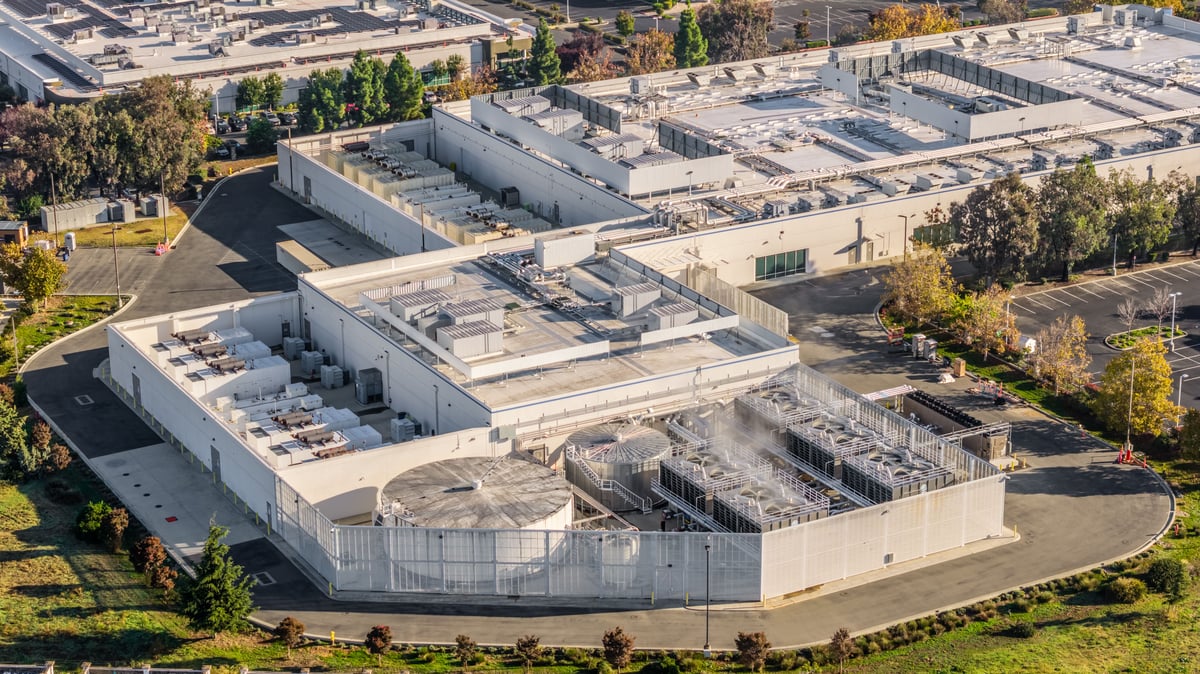
AI regulations would take the spotlight
Nothing has been more important to the Dow's, S&P 500's, and Nasdaq Composite's four-year rally than the evolution of artificial intelligence (AI) and the ongoing AI build-out. Empowering software and systems with the tools to make autonomous, split-second decisions is a multitrillion-dollar opportunity.
Under a unified Republican government, AI has flourished with minimal regulation. However, several Democrats have called for stricter regulations concerning AI data centers and the rollout/testing of AI solutions, including large language models.
Keep in mind that if Democrats retake one or both houses of Congress, it doesn't automatically mean anything changes for America's leading AI companies. Short of a two-thirds vote by the House and the Senate, President Trump still holds veto power over Congress.
Nevertheless, putting AI's shortcomings in the spotlight would be potentially terrible news for a pricey stock market that can ill afford any slowdown in the AI infrastructure build-out.
Debt-ceiling negotiations become more challenging
The other risk to the Dow, S&P 500, and Nasdaq Composite from a blue wave concerns debt-ceiling negotiations.
The debt ceiling is estimated to be reached in the first half of 2027. It's considerably easier to raise the debt ceiling under a unified Republican or Democratic government than it is with a split Congress. The ideological stalemate between America's two political parties could lead to a lengthy government shutdown in 2027.
Historically, government shutdowns haven't led to significant stock market downturns. But they have, on occasion, adversely affected U.S. gross domestic product, which can negatively impact corporate earnings.
A prolonged debt-ceiling debacle would bode poorly for Wall Street.