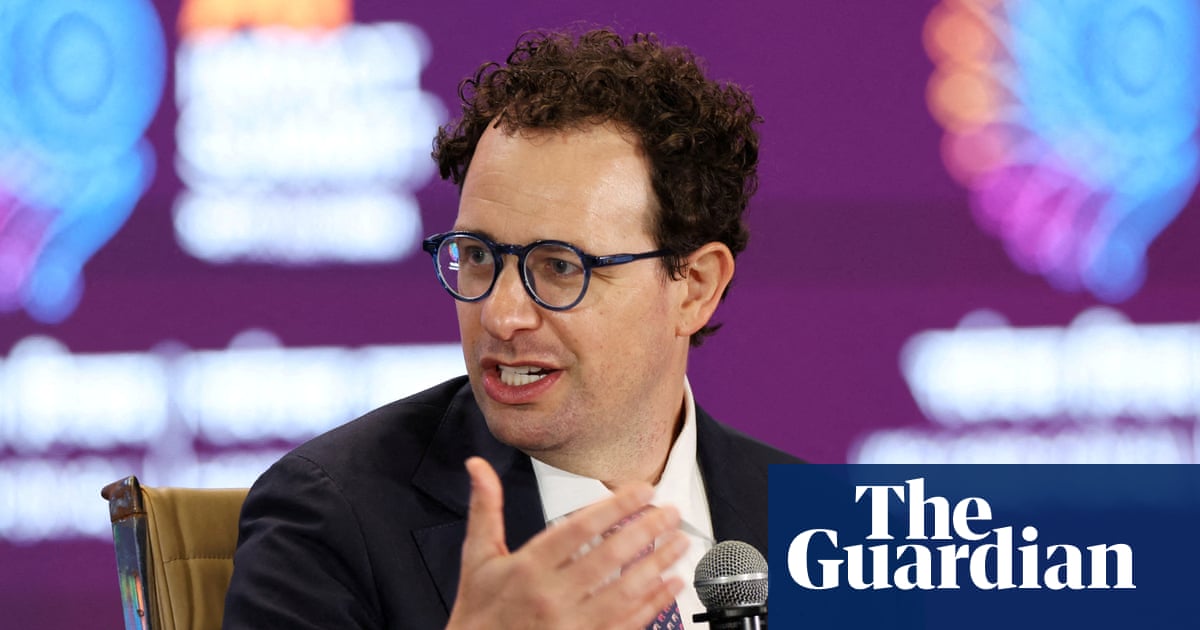

Kurt Kelty, GM's vice president of battery and sustainability, speaks June 9, 2026, during the automaker's "Empower" event in which it announced the development of sodium-ion batteries for energy storage systems.
DETROIT — General Motors is in the early stages of developing next-generation battery cells that the company believes can reduce U.S. dependence on China, while boosting domestically sourced materials.
"We're developing a supply chain such that, two years from now, three years from now, it will be domestic," Kurt Kelty, GM vice president of battery and sustainability, told CNBC during an exclusive interview. "That's what we're aiming for — when we get into market, we've got a domestic source for that."
Kelty was referring mainly to battery cells that the automaker expects to use in energy storage systems, or ESS, which are stationary devices for homes and businesses, including data centers. But the company plans to similarly prioritize domestic battery cell production for its future all-electric vehicles, a spokesperson reaffirmed to CNBC.
Kelty's comments came days before GM's crosstown rival Ford Motor fielded criticism by the Trump administration for its ties to Chinese companies, including for domestic battery cell production.
For ESS, GM has partnered with Denver-based startup Peak Energy to develop sodium-ion battery cells. The idea is to lower the need for materials that China dominates — such as lithium and ferrous sulfate, a byproduct of titanium production — and instead, use domestic-made batteries utilizing more prevalent materials in the U.S., such as sodium from soda ash.
GM is working on a variety of battery chemistries for different applications of ESS as well as its EVs. Much like baking, each ingredient and the amount put into a battery cell can change the outcome of the product. In the case of battery cells, that can mean differences in performance, cost and stability.
GM expects to launch commercial production of sodium-ion battery cells with Peak around 2029. In the meantime, it's producing other chemistries for ESS and EVs that use undisclosed amounts of materials from China.