
![Honda retreats to hybrids after failed EV bet triggers record $9 billion loss [Images]](https://i0.wp.com/electrek.co/wp-content/uploads/sites/3/2026/05/Honda-EV-plans-hybrids.jpeg?resize=1200%2C628&quality=82&strip=all&ssl=1)



Breaking News, Latest News and Videos
Dow closes above 50,000 as investors eye Trump-Xi summit - ABC News
Thu, 14 May 2026 21:33:04 GMT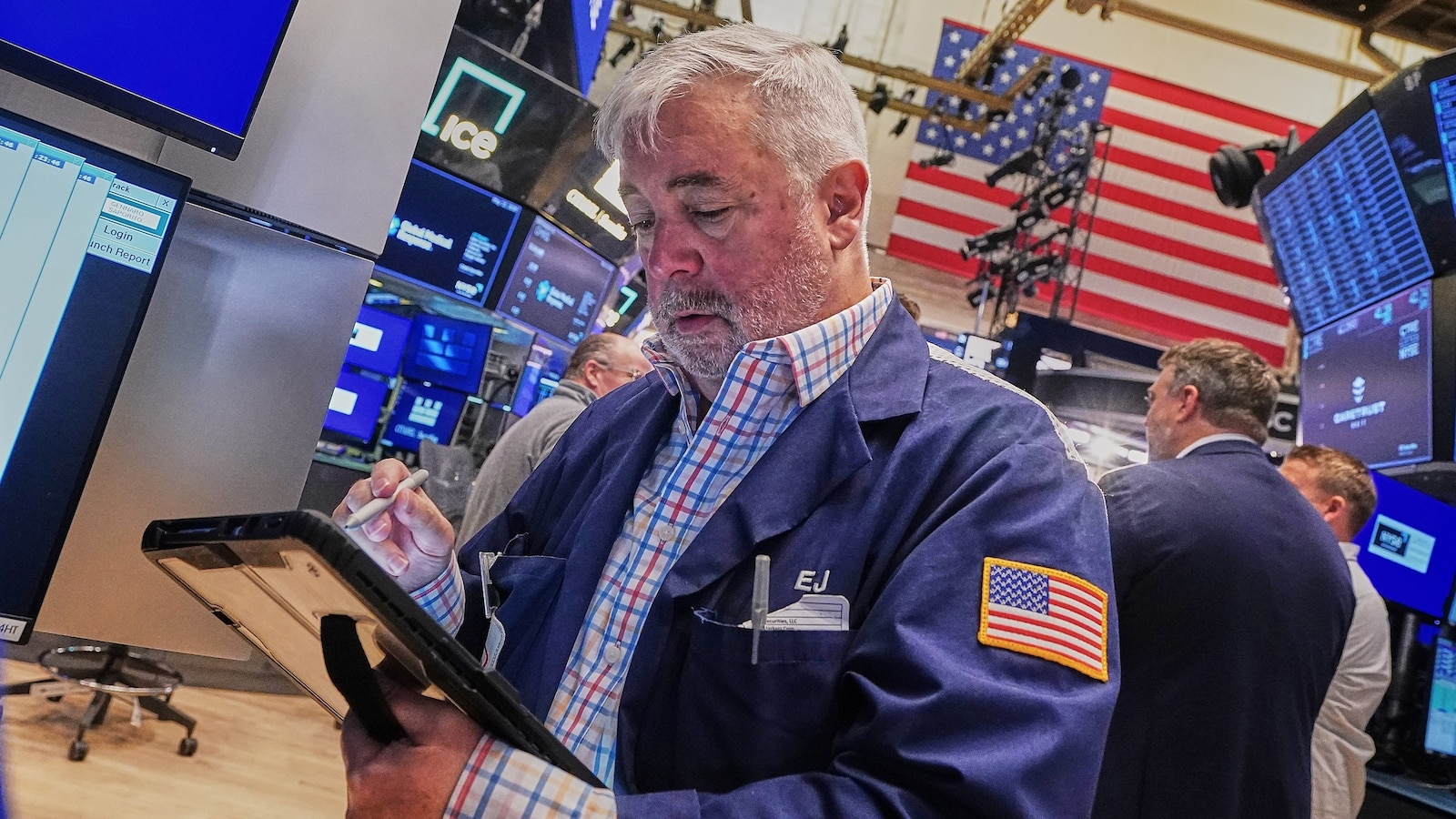
Trader Edward McCarthy works on the floor of the New York Stock Exchange, May 13, 2026.
Trader Edward McCarthy works on the floor of the New York Stock Exchange, May 13, 2026.
Trader Edward McCarthy works on the floor of the New York Stock Exchange, May 13, 2026.
Trader Edward McCarthy works on the floor of the New York Stock Exchange, May 13, 2026.
The Dow Jones Industrial Average on Thursday closed above 50,000, shrugging off a renewed bout of inflation and an apparent impasse in negotiations over the Iran war.
The rise in shares came as President Donald Trump visited Chinese President Xi Jinping in a high-stakes summit between the leaders of the world's two largest economies.
The Dow closed up 370 points, or 0.7%, registering at 50,063.46. The Dow first topped 50,000 in February. It stands about 55 points shy of an all-time record close.
The S & P 500 jumped 0.7%, while the tech-heavy Nasdaq increased 0.8%.
A group of corporate executives joined Trump on the trip, including Tesla CEO Elon Musk, Nvidia CEO Jensen Huang and Apple CEO Tim Cook.
After a dramatic welcoming ceremony, Trump sat down with Xi on the first day of a multi-day summit, during which Trump said he'd seek to deepen diplomatic and economic ties.
Trader Edward McCarthy works on the floor of the New York Stock Exchange, May 13, 2026. Richard Drew/AP
The trip came at a crucial time for Trump as the war with Iran drove up prices for Americans at home due in large part due to Iran's effective closure of the Strait of Hormuz. China is Iran's principal oil consumer.
Inflation rose for a second consecutive month as the war continued to send gasoline prices surging in April, government data this week showed.
Annual inflation jumped to its highest level in three years, according to the U.S. Bureau of Labor Statistics.
Sunny investor attitudes stem from robust corporate earnings, as well as milder economic fallout from the war than some forecasters feared, some analysts previously told ABC News.
Trump, they added, has displayed a willingness to back off of actions if they threaten a severe market reaction, reassuring investors wary of a prolonged conflict.
Despite the disruption, some measures of economic health have proven resilient.
Hiring slowed in April but remained solid, exceeding economists’ expectations, government data last week showed. The unemployment rate held steady at 4.3% in April, a low level by historic standards.
Additionally, the economy grew at an annualized rate of 2% in the first quarter of 2026, marking an acceleration from 0.5% growth recorded in the previous quarter.
ABC News' Kevin Shalvey and Jon Haworth contributed to this report.