
:max_bytes(150000):strip_icc()/ramen-recall-GettyImages-1201659848-3503b0b7cce545bd8b2d3e0dd6f3eb8d.jpg)





Washington —
One of the main pillars propping up the US economy — consumer spending — may be starting to crack.
For years, a resilient job market has kept Americans from pulling back on their spending, despite persistent fears about where the economy is heading. People’s dollars contribute to two-thirds of economic growth. A buoyant US stock market has also helped drive spending, particularly among wealthier households that are more likely to have financial investments.
That sturdy foundation that supported spending is now under pressure.
On Friday, the Bureau of Labor Statistics reported that employers shed 92,000 jobs last month as the unemployment rate rose to 4.4% from 4.3%, continuing a painful stretch of sputtering job growth. Meanwhile, all three major stock indexes fell during morning trading, as President Donald Trump said that he will not end his war on Iran unless the Middle East adversary agrees to an “unconditional surrender.”
That comes as spending itself is already hitting a rough patch: Retail sales declined 0.2% in January from the prior month, the Commerce Department said Friday, the biggest decline since May. January’s reading came in below expectations of 0%, according to a poll of economists by data firm FactSet. The figures are adjusted for seasonal swings but not inflation. The report was delayed a few weeks because of last year’s government shutdown.
A persistent streak of weak or declining spending — potentially triggered by lower stocks, rising unemployment or a combination of the two — would spell trouble for the US economy. For now, however, economists widely expect bigger tax returns this year to perk up spending in the first half of 2026, offsetting the risks to spending.
“While weather may again drag on retail sales in February, this period is likely to be an aberration amidst a still solid consumer outlook,” Ben Ayers, senior economist at Nationwide, wrote in commentary issued Friday. “Federal tax refunds are coming in nearly 20% higher than 2025, which should help to fuel renewed purchase behavior this spring.”
Resilient but frustrated
Americans didn’t cut back on their spending in 2025, despite President Donald Trump’s tariff hikes, persistent pessimism about the economy, and the weakest year for job growth outside of a recession since 2002.
While the unemployment rate remains relatively low and new applications for unemployment benefits haven’t surged, it remains to be seen whether the labor market will hold steady in 2026 — or deteriorate. That’s important, because if Americans are thrown out of work, they may be forced to cut back, economists say, hitting companies’ profits and triggering even more layoffs.
Various surveys and polls show that Americans remain frustrated with the higher cost of living these days. That’s particularly true for low-income households, which have seen their wages trail those of high earners in recent months, according to data from the Federal Reserve Bank of Atlanta. Lower and middle-income Americans have also leaned more heavily on credit cards and other loans in recent months, New York Fed data shows.
That helps illustrate the widening economic inequality in America over the past few years, an issue some economists refer to as the “K-shaped economy.”
In addition to slowing wage growth and a higher reliance on debt, low-income Americans are less likely to have financial investments, meaning they missed out on last year’s stock-market gains.
Stocks under pressure don’t bode well for high earners’ spending
Last year, America’s wealthiest spent at a brisk pace, largely boosted by a resilient US stock market and growing home equity.
Moody’s estimated that the top 10% of US earners drove about half of consumer spending in early 2025. The stock market ended 2025 with a third-consecutive year of double-digit gains.
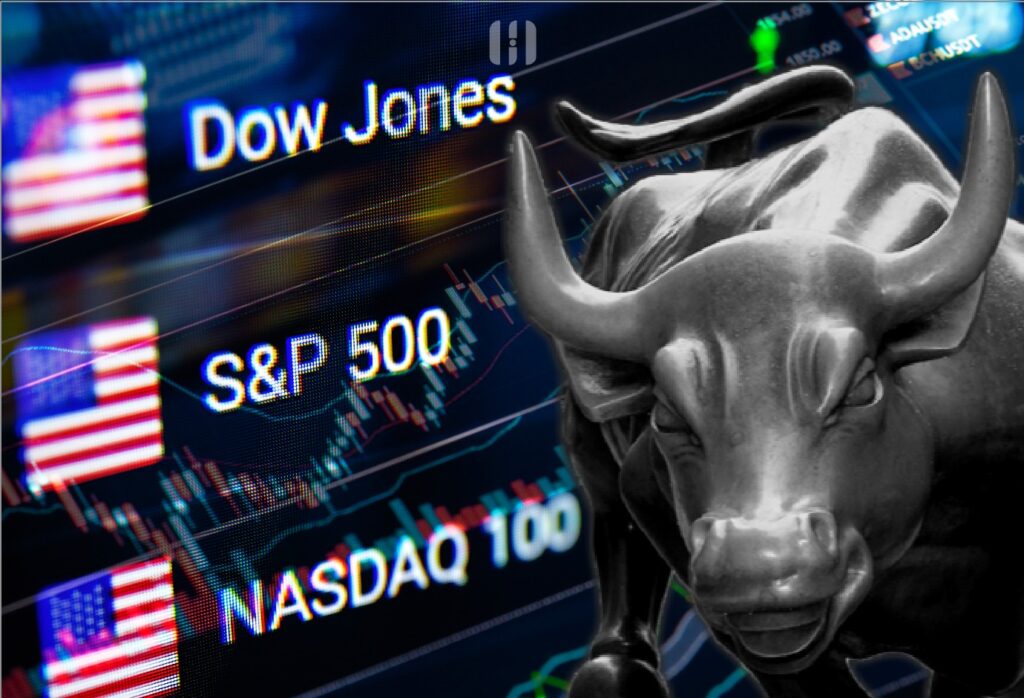
But that could change if the war in the Middle East drags on, continuing to weigh on major stock indexes. On Thursday, the Dow closed lower by 785 points, or 1.61%, as the S&P 500 sank 0.56% and the tech-heavy Nasdaq fell 0.26% — all while oil prices surged.
The losses stretched into Friday as Trump hinted his war on Iran won’t be ending soon.
“With the stock market under pressure in recent months, the significant boost to spending by high-income households from rising stock market wealth has faded,” Michael Pearce, chief US economist at Oxford Economics, wrote in an analyst note Friday.