



:max_bytes(150000):strip_icc()/GettyImages-2245999369-118d1e93bcea44eb807b8c20a8d1dc8b.jpg)


The Washington Post
Oil prices soar amid worries of sustained war in Iran
Tue, 03 Mar 2026 00:23:50 GMT
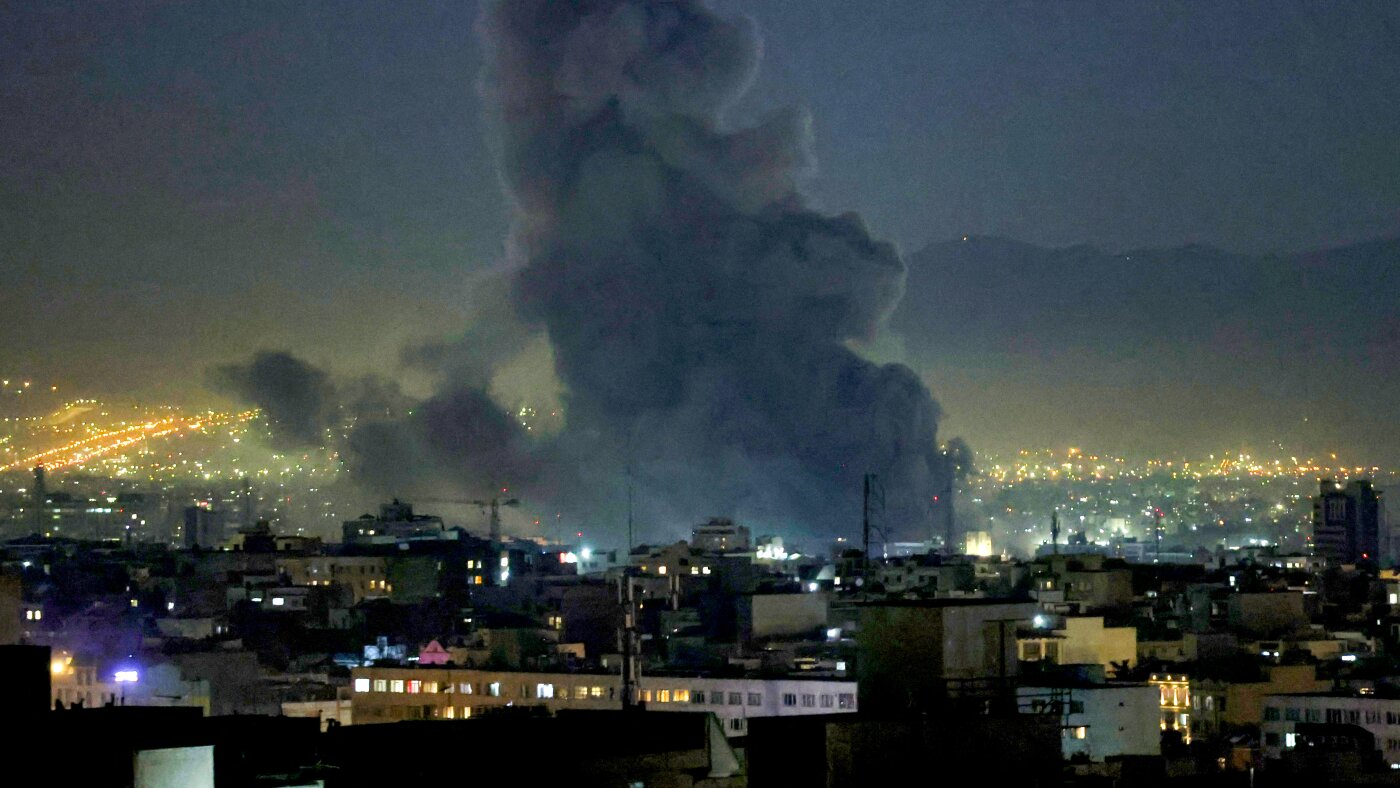
The widening conflict in Iran is shaking financial and energy markets worldwide as tankers in a key shipping corridor are targeted and oil prices begin to soar, threatening to escalate the affordability crunch facing U.S. voters. Major stock indexes recovered midday after a heavy morning of losses. Around 1:30 p.m. Eastern time, the Dow Jones Industrial Average was slightly in the red and effectively flat. The S&P 500 index also was flat.
The Nasdaq tipped into the green, rising 0.3 percent. Airline stocks continued to sag as thousands of flights were canceled around the globe.
Shares of American Airlines were down 4 percent, Delta Air Lines nearly 2.5 percent, and United Airlines roughly 3 percent. Investors continued to reach for safe havens. Gold prices, Treasury yields and U.S. dollar all rose in telltale signs of mounting investor uncertainty.
Meanwhile, oil up about 6 percent by midafternoon. Diesel prices soared even higher, up 14 percent. Analysts said that will probably result in diesel price hikes at the pump this week of more than 20 cents per gallon.
The size of the economic fallout hinges on how long fighting persists and whether there is any political or military stability in Iran in its aftermath, analysts say. Ask The Post AIDive deeper
The key risk for the global economy — and President Donald Trump’s political fortunes at home — is a sustained disruption of shipping traffic in the Strait of Hormuz, through which roughly 15 percent of the world’s oil and 20 percent of its liquefied natural gas passes.
Ships have largely stopped moving through the strait after reprisal attacks by Iran and its threats against vessels that defy its directive to stay away. The Islamic Revolutionary Guard Corps, the most powerful branch of the Iranian armed forces, declared the strait effectively closed over the weekend.
“Commercial traffic has effectively stopped,” said a report from Windward Maritime AI, which tracks shipping traffic. At least four tankers across a 100-nautical-mile stretch of the strait and the Gulf of Oman have been attacked since the U.S. and Israel assaulted Iran over the weekend. Major shipping firms, Windward wrote, “have all suspended Gulf transits, war risk insurance has been canceled, and hundreds of vessels are now at anchor or adrift.”
If shipping through the strait does not resume quickly, analysts say, the result will be a sustained increase in global energy costs and a potentially sharp escalation of U.S. gasoline prices.
“The key question is when do vessels re-establish export flows,” Alan Gelder, senior vice president of refining, chemicals and oil markets at Wood Mackenzie, said in an email. The firm said prices will rise considerably more if traffic through the strait does not resume quickly. It also projects that oil could jump to more than $100 per barrel, a price that would jolt world economies. Barclays Bank and JP Morgan issued similar warnings.
“The most recent comparison is during the early days of the Russia/Ukraine conflict, when the fear of loss of Russian supplies drove the oil price to over $125,” Gelder said.
The concerns about energy prices come at a time Trump has struggled to lower costs for Americans and has made bringing down the price of gas a rallying cry for his administration.
If Trump cannot quickly secure the strait, he could find himself in the same predicament his immediate predecessor, Joe Biden, faced after the invasion of Ukraine sparked a global energy panic: a political backlash from drivers suddenly struggling to cover the cost of filling their tanks. Ask The Post AIDive deeper
For the past few months, average prices have stayed at or below $3 for a gallon of regular gas. That is poised to change quickly. The question is whether the price hike can be contained to 10 or 20 cents or keep pushing up from there.
It all hinges on how much the cost of crude goes up and how long that price stays high. A barrel of Brent, which traded for under $70 last week, was selling for $78.40 in futures markets Monday morning. Western Texas Intermediate Crude, the key U.S. benchmark, was up a similar percentage.
While analysts say the situation is volatile and an easing of hostilities could deflate prices, many agree at the moment that oil could shoot above $100 per barrel. If it were to stay there, the average cost of a gallon of regular could rise toward $4.
The U.S. standing as the world’s largest producer of oil better equips the country to absorb oil volatility than in the past, but it does not inoculate it from global shortages. Oil is a global commodity, and its prices in the U.S. and everywhere else are driven by market forces. Presidents have few policy tools to protect U.S. consumers from price shocks. Trump could ease the pressure by releasing oil from the Strategic Petroleum Reserve, but analysts say such an action would quickly be offset by the huge volume of crude choked off at the strait.
A prolonged disruption would test the resilience that global oil markets have built over the past decade, as stepped-up production, widening distribution networks, and advances in drilling and fuel transport technologies made the energy industry better equipped to navigate a crisis. These factors still may not be enough to offset the inability of tankers to move all the oil that previously had been shipped through the strait.
“If this a short-term disruption, there are potentially other sources of oil that can be moved into place,” said Jason Bennett, chair of the Global Projects group at Baker Botts, a law firm that advises major oil companies. “If it goes on for a long time, people start worrying about the kinds of things that were more common when one of these events happened 20 years ago.”
For now, the strait is effectively a no-go zone for tankers, increasing pressure on the Trump administration to find a resolution to the conflict quickly. A weekend pledge by the oil-producing nations of the OPEC+ consortium to modestly increase their output will also do little to help replace all the oil not flowing through it.
“Roughly one-fifth of global oil supply passes through the Strait of Hormuz, a vital artery for world trade,” Jorge León, a senior vice president of Rystad Energy, wrote in a research note Sunday. “Markets are more concerned with whether barrels can move than with spare capacity on paper.”
León said Rystad is bracing for oil prices to rise significantly this week unless there is a swift de-escalation of the conflict.
Marine tracking data shows commercial traffic on the strait plummeted by the end of the weekend. Insurers began withdrawing policies on tankers traveling through it, and commercial shipping companies said they would not be sending their vessels into the area until tensions eased.
Industry giant Maersk was among them.
“The safety of our crews, vessels and customers’ cargo remains our key priority,” the firm said in a bulletin Sunday. “We are suspending all vessel crossings in the Strait of Hormuz until further notice.”
Some industry experts say the markets maybe overreacting, and they project prices will quickly stabilize. That is how things have played out during some other geopolitical conflicts in the past couple of years, including the military strikes on Iran’s nuclear arsenal in June, as well as the intermittent Houthi missile attacks on vessels sailing through the strait in response to Israel’s war in Gaza.
“A sustained closure of Hormuz would almost certainly provoke coordinated regional and U.S. involvement to secure maritime passage,” Patrick De Haan, head of petroleum analysis for the pricing app Gas Buddy, wrote in a blog post. “Too many global economies depend on that corridor for it to remain blocked for long.”