


The Motley Fool
No Forward-Looking Guidance Needed: Fed Chair Kevin Warsh Just Dropped an Unmistakable Clue About Interest Rates
Thu, 09 Jul 2026 19:15:14 GMT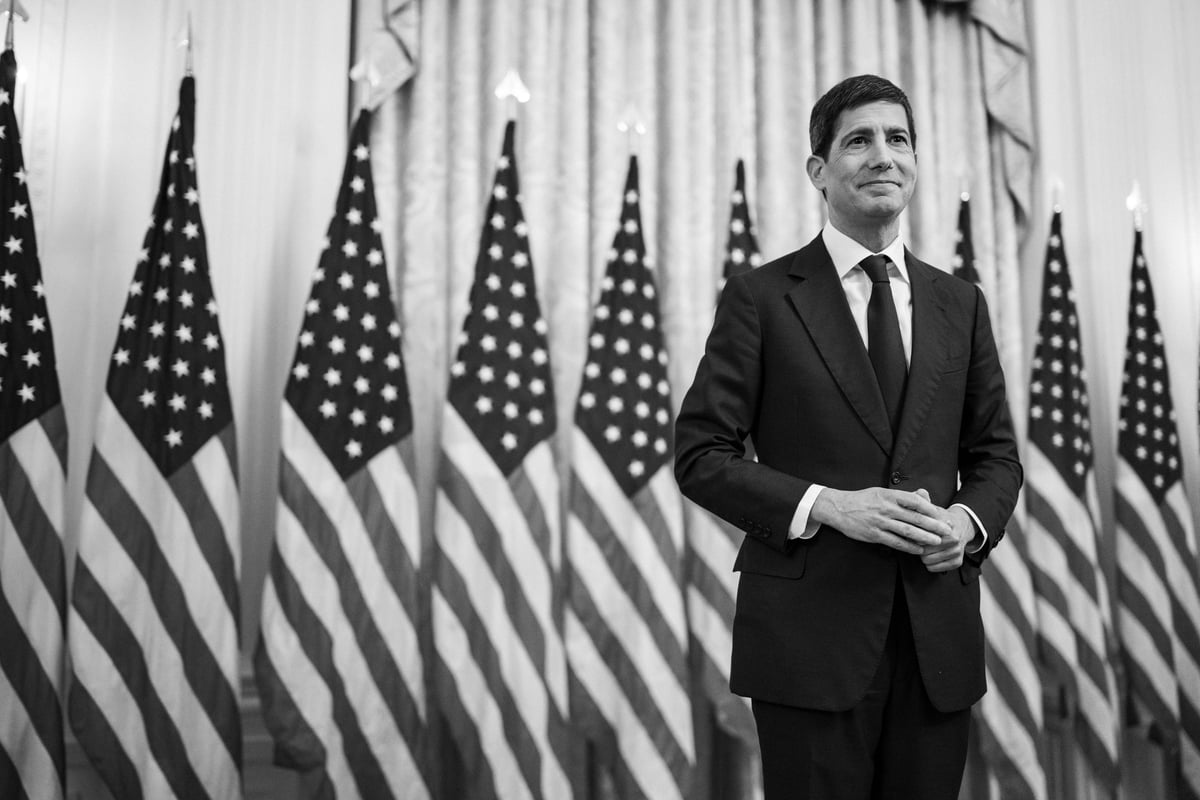
This has been a year of history-making moments for Wall Street. We've watched the Dow Jones Industrial Average (^DJI +0.16%), S&P 500 (^GSPC +0.71%), and Nasdaq Composite (^IXIC +1.19%) vault to record highs, witnessed the largest initial public offering in history, and saw an ultra-rare changing of the guard at the Federal Reserve.
On May 22, President Trump's handpicked successor to Jerome Powell, Kevin Warsh, was officially sworn in as Fed chair. He's only the 17th head of the central bank since its founding in December 1913.
But Warsh's ascent comes at a particularly challenging time for the U.S. economy and Wall Street. Trumpflation (i.e., Trump-driven inflation) pushed the inflation rate to a three-year high of 4.2% in May and has left the Federal Open Market Committee (FOMC) -- the 12-person body, including Fed Chair Warsh, responsible for setting the nation's monetary policy -- at a crossroads.
Kevin Warsh is heading a reform-oriented Fed
During his swearing-in ceremony at the White House, Warsh made clear that he would reform America's foremost financial institution.
For starters, he's been hypercritical of the central bank's bloated balance sheet, primarily consisting of long-term U.S. Treasury bonds and mortgage-backed securities. Between August 2008 and March 2022, the Fed's balance sheet grew tenfold to nearly $9 trillion.
Warsh has also spoken about changing how the FOMC looks at inflation. While testifying before the Senate Banking Committee on April 21, he proclaimed that, "price stability should be a change in prices such that no one's talking about it." Modernizing the data policymakers consider when making decisions and altering how the FOMC views inflation can give the Fed more monetary policy flexibility.
But at the forefront of Warsh's changes is the desire to eliminate forward-looking guidance. The new head of the Fed wants to present only the facts and let equity markets decide what that entails. The FOMC's June 17 statement abandoned previous language that helped investors determine whether policymakers were likely to ease or hike interest rates.
Powell's successor just offered a massive clue about interest rates
Through seven weeks on the job, Fed Chair Kevin Warsh has avoided offering forward-looking guidance. However, at the ECB Forum on Central Banking in Sintra, Portugal, on July 1, Warsh inadvertently spilled the beans on what's likely coming regarding interest rates.
When questioned about inflation on the ECB Forum panel by CNBC's Sara Eisen, Warsh replied:
If there were people in household or the business sector, in the financial markets, who thought that this central bank was going to be comfortable with an inflation objective above 2%, well, I guess they'd be disappointed. We're going to deliver price stability in the U.S.
This statement, made by a historic monetary hawk, paints a pretty clear picture that he and the 11 other FOMC members are strongly leaning toward raising the federal funds target rate in the not-too-distant future.
To add, even though crude oil prices have fallen and broader inflation is projected to decline in July, Core Personal Consumption Expenditures, which exclude volatile food and energy expenses, should head higher. This implies that Trumpflation has entered a new stage, and the effects of Iran-war-driven inflation are impacting the broader economy (i.e., beyond the energy sector).
Wall Street doesn't need forward-looking guidance from Kevin Warsh if he continues to make blunt/direct statements about inflation, as he did at the ECB Forum.