



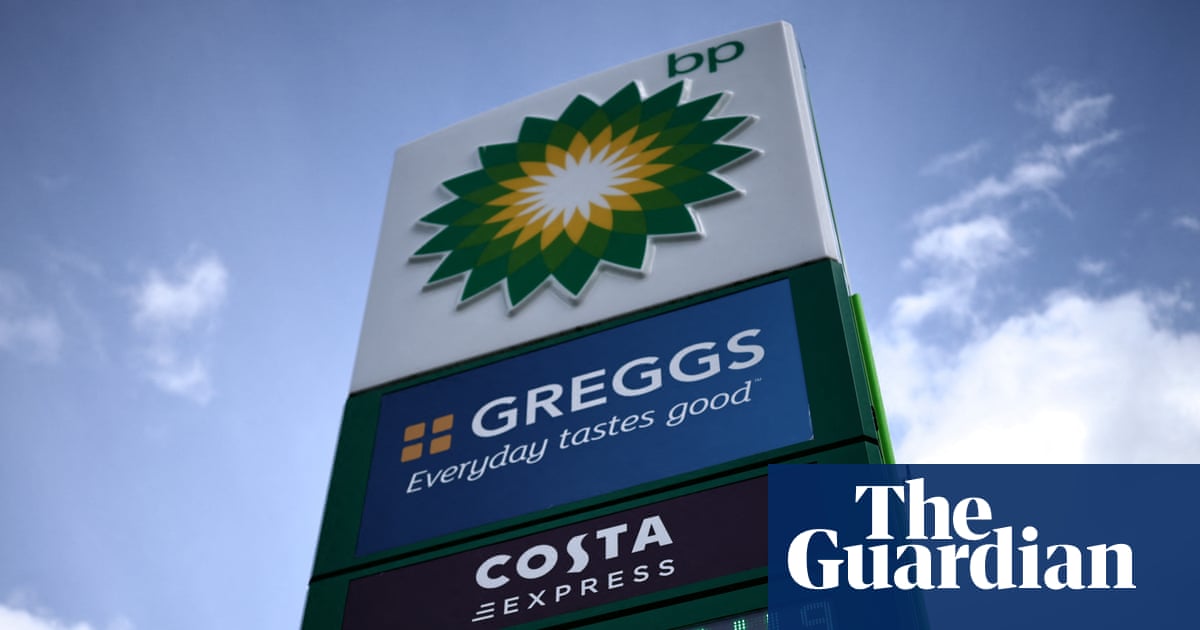
BP has provoked outrage by revealing its profits more than doubled in the first quarter of this year after its oil traders reaped the benefit of the war in Iran.
The energy company capitalised on a surge in global oil market prices to report better than expected profits of $3.2bn (£2.4bn) for the first quarter, more than double the $1.38bn it made in the same period last year.
The company credited “exceptional oil trading” for its highest quarterly profit since 2023, triggering an immediate backlash from campaign groups and calls for tougher windfall taxes on fossil fuel companies.
In her first results as BP’s new chief executive, Meg O’Neill, said that, despite facing “an environment of conflict and complexity”, the company was playing its part to “keep oil, gas and refined products flowing”.
The global energy market has faced the greatest supply crisis in history, according to the International Energy Agency, after Iran throttled exports of oil and gas from the Gulf by seizing control of the strait of Hormuz, leading to record market price increases in recent weeks.
The international benchmark reached highs of $119.50 a barrel in March before a record release of emergency stockpiles helped to cool the market. The Brent crude price rose 3% on Tuesday to $111.42 a barrel, its highest level since 7 April, the day the US-Iran ceasefire was agreed.
The conflict has also resulted in damage to vital Gulf energy infrastructure, including BP’s Rumaila oilfield in southern Iraq, which was targeted by drone attacks. The multibillion-dollar repair bills are expected to keep a lid on profits for big oil companies in the future.
O’Neill said BP’s employees had been working “relentlessly to keep our assets producing safely, reliably and efficiently” and was “working with customers and governments to get fuel where it’s needed, helping minimise disruption and the impact it can have on people’s lives”.
O’Neill added that BP was ready to work closely with the Iraqi government to return production at Rumaila “as soon as possible” once shipping restrictions via the strait of Hormuz were lifted.
Campaigners said the “horrifying” profits had come at the expense of millions of energy consumers who have little choice over their reliance on fossil fuels.
Maja Darlington, a climate campaigner for Greenpeace UK, said the war had been “an entirely predictable disaster for everyone except the oil industry. BP’s profits are booming, with Trump’s bombs bringing billions for them and bigger bills for us.”
Patrick Galey, the head of investigations at Global Witness, said: “It is horrifying to see BP’s profits grow as millions suffer the fallout from the US-Israel war on Iran. Unfortunately, we’ve been here before – when Russia invaded Ukraine four years ago we saw big oil firms make bumper profits from spiralling fuel costs.”
BP’s profits have also reignited calls for higher windfall taxes on oil companies to fund assistance for struggling households. The war in Iran is forecast to push household energy bills to nearly £2,000 a year from July, when the government’s next quarterly cap on gas and electricity charges comes into effect.
Simon Francis, the coordinator of the End Fuel Poverty Coalition, said: “The government must respond with emergency support for the hardest-hit households and accelerate the shift to a renewables-led energy system that insulates people from price shocks caused by our exposure to oil and gas markets.”
The chancellor, Rachel Reeves, has ruled out offering the sort of universal support given to all households by Liz Truss’s government and said any future help would be targeted at the poorest households. She is expected to keep the windfall tax imposed during the 2022 energy crisis in place.
Reeves told MPs on Tuesday that the government would be able to “capture the profits made in the UK through the windfall tax”, which is opposed by the Conservatives and Reform.
The windfall tax, known as the energy profits levy, was set at 38% after Russia’s full-scale invasion of Ukraine, lifting the headline rate of tax on upstream oil and gas activities to 78%. However, the tax applies only to earnings generated within the UK and does not catch profits made in the rest of the world.
Ed Miliband, the energy secretary, said: “It would be completely wrong for a government to stand by and allow companies to make excess profits from a war. That’s why we’re taxing these windfall profits to help with the cost of living. And why the Tories, Reform and the SNP are utterly wrong to oppose the windfall tax.”