





Fortune
Coinbase didn't just lay off 14% of its staff due to AI. It replaced managers with ‘player-coaches’ and turned its org chart upside down
Tue, 05 May 2026 22:29:47 GMT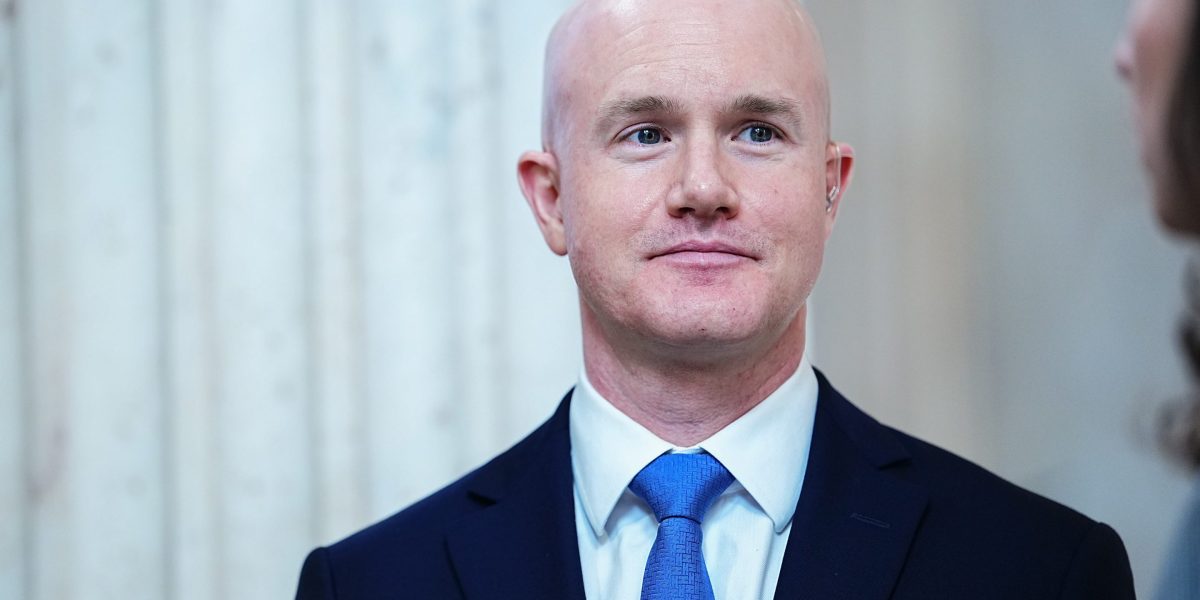
Coinbase CEO Brian Armstrong is adapting the company for the AI age, cutting 14% of employees and reimagining its org chart to bring the company back to its startup roots.
Armstrong said the layoffs, which could affect just under 700 employees based on Coinbase’s last employee count, are partly due to a crypto downturn. Yet the main motivator is making the company’s leadership structure flatter, enabling its employees to work fast, with AI at the forefront.
In practice, this means cutting what Armstrong dubs “pure managers,” opting instead for “player-coaches” who oversee team members but are also strong individual contributors. The company is also planning to leverage its most AI savvy employees by creating “AI-native pods,” which could even include one-person teams directing agents that encompass the responsibilities of engineers, designers, and product managers.
“We are not just reducing headcount and cutting costs, we’re fundamentally changing how we operate: rebuilding Coinbase as an intelligence, with humans around the edge aligning it,” Armstrong wrote in a post on X.
The CEO said following the layoffs the company’s leadership structure will also stretch no more than five layers below his own position. Flattening the leadership structure will increase efficiency, he argued.
“Layers slow things down and create coordination tax,” Armstrong added in the X post.
For years, Armstrong has been all in on AI. After securing GitHub Copilot and Cursor licenses for every engineer, he “went rogue,” asking engineers to get onboarded with the tools by the end of the week, rather than the “quarters” some in the company had said it would take. Those who didn’t meet the deadline had to face the consequences.
“Some of them had a good reason, because they were just getting back from some trip or something,” Armstrong said last year on the Cheeky Pint podcast with Stripe CEO Patrick Collison. “Some of them didn’t, and they got fired.”
Over the past year, Armstrong said he has seen how AI has allowed engineers to ship in days what used to take a team weeks. Nontechnical employees are also using AI to write code while many of the company’s workflows are being automated, transformations that Armstrong said influenced Tuesday’s layoff decision.
Coinbase did not immediately respond to Fortune’s request for comment.
To be sure, as Coinbase flattens its org chart, it is also increasing its employee-to-manager ratio, with each leader responsible for 15 or more reports. This follows the recent “megamanager” trend sweeping corporate America, where managers now oversee an average of 12.1 employees, up from 10.9 in 2024, according to Gallup. Meta may be the starkest example, with its new applied engineering team sporting a 50-to-1 employee-to-manager ratio.
Apart from Coinbase, other companies such as Block and Snap have laid off thousands, citing the rapid advancement of AI. Yet, Sam Altman, the CEO of OpenAI, has also warned that some companies are “AI washing,” or blaming unrelated layoffs on AI. Aleksandar Tomic, the associate dean for strategy, innovation, and technology at Boston College, told Fortune some CEOs have used the pretext of AI restructures as a way to spin layoffs as a positive, rather than a negative, for their companies. At the same time, layoffs economy-wide remain low, leaving these AI-related layoffs largely as a tech sector phenomenon.
“Instead of saying, ‘Hey, we have some business issues that caused us to have layoffs,’ which would be viewed negatively by the market, they say, ‘Oh, we are laying off people to gain efficiency,’ and then their stock price goes up,” he said.
Still, Armstrong said the layoffs and reorganization of Coinbase’s leadership structure will help the company adapt for an era where “small, high context” teams execute quickly. The old, unhurried way of working is disappearing fast.
“AI is bringing a profound shift in how companies operate, and we’re reshaping Coinbase to lead in this new era,” Armstrong said.