

NBC News
Elon Musk gets combative on the stand during Day 2 of jury trial against OpenAI
Thu, 30 Apr 2026 06:29:51 GMT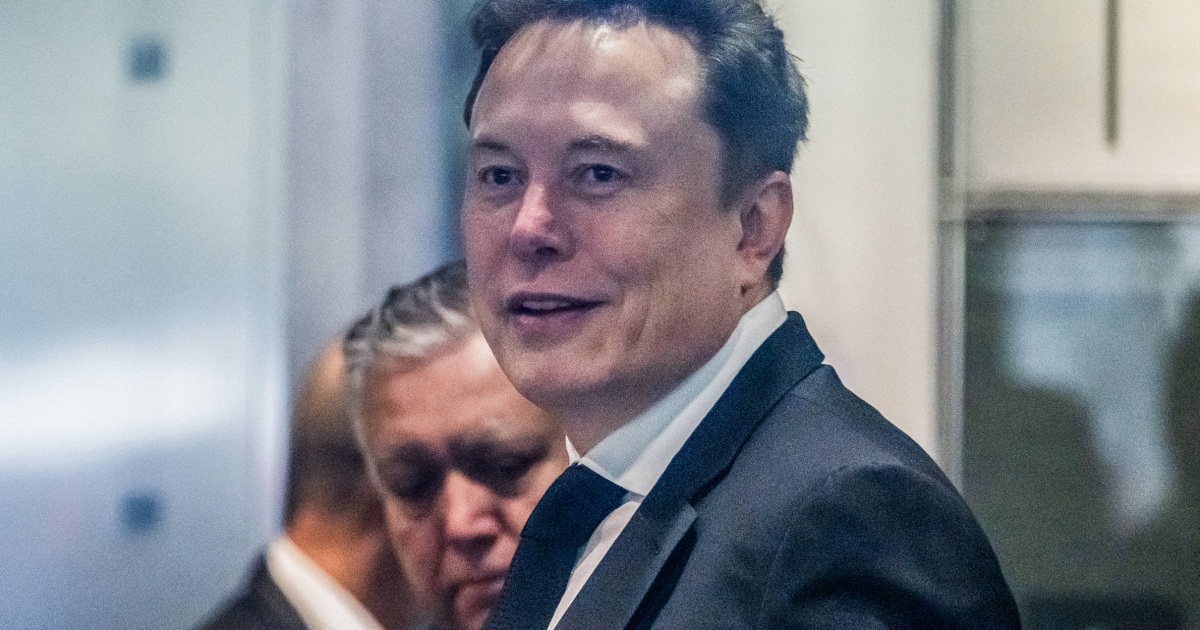
OAKLAND, Calif. — Elon Musk repeatedly fired back at OpenAI’s lawyer in a tense cross-examination during the second day of a tech trial that could help define the future of artificial intelligence.
Subscribe to read this story ad-free Get unlimited access to ad-free articles and exclusive content.
Musk testified as part of his lawsuit against OpenAI CEO Sam Altman, in which he accuses Altman of betraying the public by enriching himself through the AI company they founded together in 2015 as a nonprofit venture.
“They can’t have it both ways,” Musk said of OpenAI on the stand Wednesday. “They can’t have a nonprofit and free funding and the positive halo effect of being a nonprofit charity and also enrich themselves greatly.”
Throughout the questioning, Musk grew combative against OpenAI lawyer Bill Savitt, who claimed that Musk was “never committed to OpenAI being a nonprofit.”
“Your questions are not simple. They’re designed to trick me, essentially,” Musk told the lawyer. He accused Savitt of being “misleading” with his questioning when he pointed out that Musk didn’t donate $100 million to OpenAI, despite claiming to have done so in his earlier deposition.
OpenAI completed a tumultuous corporate restructuring in October, shifting its capped-profit model to a more traditional for-profit structure. The for-profit arm, which continues to be overseen by a nonprofit foundation, raised $122 billion in its latest funding round that closed last month.
In one lengthy back-and-forth, Savitt pushed Musk on whether he remembers old documents and discussions about OpenAI’s potential for-profit venture.
The questioning got so heated that the judge asked both parties to “calm down,” and Musk at one point asked Savitt: “Can I answer this question without you interrupting my answer?”
When asked about the $1 billion he originally promised to OpenAI, Musk began to tout the value of other things he contributed, such as his reputation. It prompted the judge to remind Musk to answer the question.
Musk confirmed that he never followed through on the $1 billion commitment — something that Altman's team pointed out in their counterclaim. Musk told Savitt that was because he “lost confidence in the team.” Instead, he said he contributed a total of $38 million.
The tech mogul, who left the board of OpenAI in 2018, seeks to stop the ChatGPT maker from becoming a for-profit company. He launched his own AI company, xAI, in 2023 as a for-profit company — “because that’s how I’ve created all my other companies,” he said on the witness stand.
“I formed many tech companies. I could have done so with OpenAI. I chose not to; I chose to do something that would be a charity,” Musk said. “I deliberately chose to create this as a nonprofit for the public good.”
Savitt also questioned Musk’s motivations ahead of his testimony Tuesday, accusing him of abandoning the organization simply because he “didn’t get his way.” He added that Musk was dismissive of OpenAI employees focused on safety and had called them “jackasses.”
Aked Wednesday about whether he ever used such language to employees, Musk responded in his testimony: “It’s possible I did it on occasion.” He said it would have been something like, “Don’t be a jackass.”
“Sometimes you have to use language that gets people out of their comfort zone,” Musk added. “If we’re going in the wrong direction … you have to use strong language to get them back on course.”
For Musk and Altman, the lawsuit is the culmination of a yearslong feud that has sometimes led the two former associates to trade public barbs online. Altman was in the room Wednesday as Musk testified.
Musk is demanding an estimated $134 billion in damages from OpenAI and Microsoft, one of OpenAI’s top financial backers and a co-defendant in the case. He claims OpenAI benefited from his money, advice, recruiting efforts and connections.
But Altman’s side rebuts the credit he takes, citing how Musk never fulfilled his $1 billion promise and saying he quit when Altman and fellow co-founders Greg Brockman and Ilya Sutskever refused to let him control the enterprise or absorb it into Tesla.
“I just needed to make sure it would go in the right direction,” Musk said in court Wednesday. “We generally agreed, or I thought we agreed, that I would have initial control and very quickly I would lose majority control of the company.”
Musk described himself as “a fool who created free funding for them to create a startup” when he intended to create a nonprofit venture that nobody would own stock in.
He will be back in court Thursday for more cross-examination.