
:max_bytes(150000):strip_icc()/GettyImages-22049449221-870842271e19420d855eefdd5dac6763.jpg)





ABC News
20-year-old plaintiff testifies in landmark social media addiction trial
Fri, 27 Feb 2026 09:11:10 GMT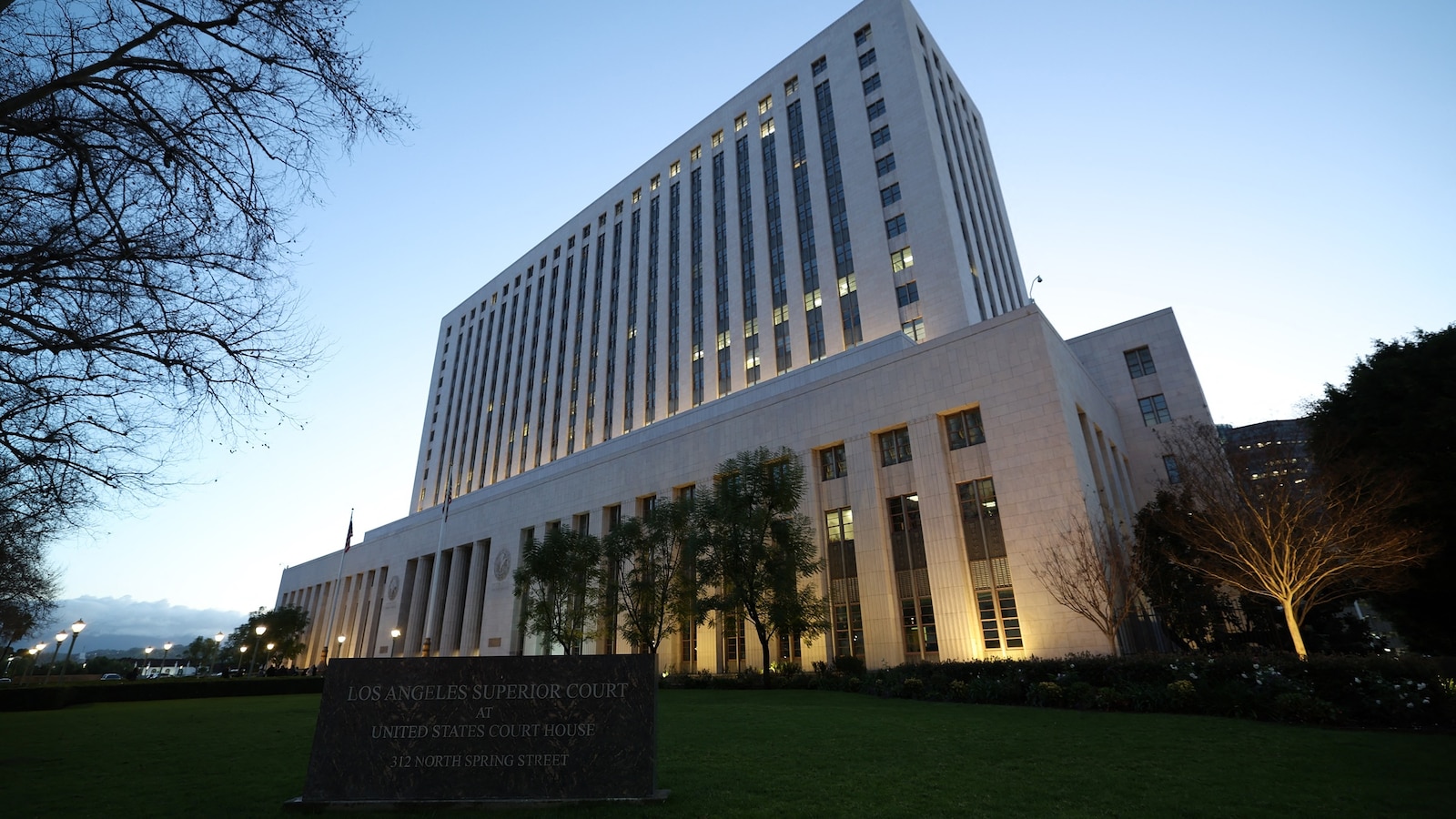
The Los Angeles Superior Court building is seen in Los Angeles on February 18, 2026.
The Los Angeles Superior Court building is seen in Los Angeles on February 18, 2026.
The Los Angeles Superior Court building is seen in Los Angeles on February 18, 2026.
The Los Angeles Superior Court building is seen in Los Angeles on February 18, 2026.
The 20-year-old plaintiff at the center of a landmark social media trial is testifying in court on Thursday.
The lawsuit, brought by a woman identified as "Kaley," alleges major social media companies intentionally designed their platforms to be addictive.
The lawsuit claims Kaley was exposed to those addictive design features as a child and got hooked on social media apps starting as young as age 6. The suit specifically claims features like auto-scrolling got Kaley addicted to the platforms, ultimately leading to anxiety, depression and body image issues.
During her testimony on Thursday, Kaley answered questions about her early life and social media use, saying she began using the video sharing platform YouTube -- which is owned by Google -- when she was 6 years old.
Kayley testified that she first started using YouTube without an account, because no account was necessary to watch videos on the app. Initially, she said she would use the app to watch videos about online games and lip balm collections.
She testified that she did not create an account until she was 8 years old. When asked by her lawyer, Mark Lanier, how she got around the age restrictions for creating an account connected to the app, she said she simply selected a "random age."
The Los Angeles Superior Court building is seen in Los Angeles on February 18, 2026. Patrick T. Fallon/AFP via Getty Images
YouTube does not require an account to view content, however, certain kinds of content are marked as "age-restricted," meaning anyone without an account would not be able to view it. In order to set up a Google Account, which is used to set up a YouTube account, U.S.-based users must be 13 years or older, according to Google.
According to Lanier, Kaley ultimately uploaded 200 videos to YouTube before the age of 10. Asked by her lawyer how she felt when any of those videos failed to gain views, or when she lost subscribers, Kaley responded that it would upset her. Closing her account was not an option in her mind, she said, because the idea of not being on the app was worse than any negative comments her videos received.
She said she "would go to bathroom to check notifications at school."
Kaley also said her own viewing habits were affected by YouTube's "autoplay" feature, which plays suggested "related" videos to watch next. She testified that the feature sometimes kept her on the app for hours at a time.
In order to increase her YouTube subscriber numbers, Kaley said she turned to Instagram, where a constant flood of notifications kept her reaching for her phone, even into the night. On one occasion, Lanier pointed out, Kaley was on Instagram for more than 16 hours.
Kaley testified that the fear of missing something kept her engaged with the app at all times. When her mother would take away her phone, she said, she would scream and cry.
Kaley's therapist Victoria Burke, who treated Kaley when she was 13 years old, from January to July 2019, also testified in the trial on Thursday.
Lanier and Meta's defense lawyers -- who have argued that Kaley experienced mental health issues before she used social media -- both walked through Burke's clinical charts, which detailed Kaley's social phobia and body dysmorphia. Burke's clinical notes also documented Kaley's issues at home and at school, as well as bullying on social media from her peers at school.
Defense lawyers argued that Burke never diagnosed Kaley with a social media addiction and was not an expert in how social media affects the brain.
Kaley is still set to be cross-examined by defense lawyers.
The landmark case is being heard in the California Superior Court of Los Angeles County, with Meta -- Facebook and Instagram's parent company -- and YouTube, which is owned by Google, moving forward as defendants.
Social platforms Snapchat and TikTok were previously named in the lawsuit but reached settlements with the plaintiffs last month without admitting wrongdoing.
The social media companies deny the allegations. They have argued that other factors contribute to the mental health of young social media users and that they have put in place guardrails to protect them, including specific parental controls for accounts belonging to children and teens.
Facebook founder and Meta CEO Mark Zuckerberg testified in the trial previously, answering questions related to age restrictions, app engagement and filters.
Instagram head Adam Mosseri gave testimony earlier in the trial and said he disagreed with the term "addiction" as used in the lawsuit. He said "clinical addiction" is different from "problematic use" of Instagram, which he said was "real" and described the latter as users spending "too much time" on the platform.
Mosseri said there is always a tradeoff between "safety and speech," saying users don't like it when they remove options from Instagram.
The case is the first of more than 1,500 similar lawsuits nationwide to go before a jury, potentially setting a precedent for how tech companies are held liable for product design.
In a previous statement to ABC News, a Meta spokesperson said, "We strongly disagree with these allegations and are confident the evidence will show our longstanding commitment to supporting young people."
Meta said that the company has made "meaningful changes" to its services, such as introducing accounts specifically for teenage users.
In a separate statement to ABC News this week, a Meta spokesperson added, "The question for the jury in Los Angeles is whether Instagram was a substantial factor in the plaintiff's mental health struggles. The evidence will show she faced many significant, difficult challenges well before she ever used social media."
YouTube has also said the allegations in the lawsuit are "not true."
"Providing young people with a safer, healthier experience has always been core to our work," spokesperson José Castañeda said in a previous statement to ABC News. "In collaboration with youth, mental health and parenting experts, we built services and policies to provide young people with age-appropriate experiences, and parents with robust controls."