





NBC News
Victim’s family in fatal Texas Tesla ‘automated driving assistance’ crash files lawsuit
Wed, 24 Jun 2026 12:11:26 GMT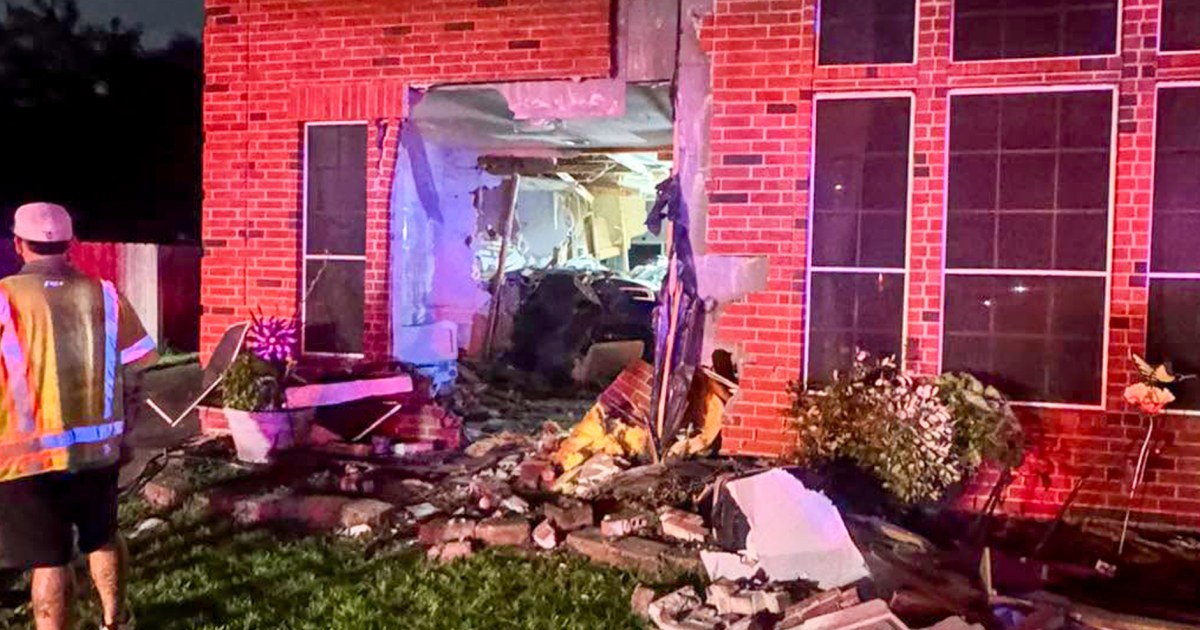
The family of a woman who was killed when a Tesla in an automated assist mode crashed into her Houston-area home has sued Tesla and the person behind the wheel, attorneys said Tuesday.
Subscribe to read this story ad-free Get unlimited access to ad-free articles and exclusive content.
The suit, filed by 76-year-old Martha Avila’s daughter Jennifer Barbour and her husband, Justin Barbour, in Harris County District Court, alleges a “design defect” involving Tesla and a failure to warn. It alleges negligence against both Tesla and the driver, Michael Butler.
Avila was in her home in Katy, a Houston suburb, at around 8 p.m. Friday when a Tesla Model 3 crashed into her brick residence, according to officials.
She was airlifted to a nearby hospital, where she was pronounced dead, the Harris County Sheriff’s Office has said.
Butler “stated he was operating with an automated driving assistance system engaged at the time of the crash,” according to the sheriff’s office.
The office said Butler showed no signs of intoxication and was cooperative.
Tesla and its CEO, Elon Musk, did not immediately respond to a request for comment Tuesday night. Musk responded to a news story about the crash Monday night on X.
“FSD drives slowly through neighborhood streets, and this was a high-speed crash!” he wrote, referring to the vehicle’s Full Self-Driving mode.
Tesla first rolled out “Autopilot” and later “Full Self-Driving” as features on its vehicles. The company says on its website that both are “intended for use with a fully attentive driver, who has their hands on the wheel and is prepared to take over at any moment.”
Ashok Elluswamy, vice president of AI software at Tesla, defended the vehicle’s systems Monday. “In this case, the driver manually overrode self-driving by pressing the accelerator all the way to 100% of the accel pedal in this residential area,” Elluswamy wrote on X, which is owned by Musk.
The lawsuit, a copy of which the Avila family’s attorneys provided to NBC News, alleges that the Tesla was in “Autopilot” mode and that the system has “a history of known danger.” The suit cites a 2023 Washington Post analysis of government data that “identified at least 17 fatal incidents linked to Tesla’s Autopilot.”
“The actions and inactions of Defendant Butler were done with reckless disregard for a substantial risk of severe bodily injury,” the lawsuit alleges.
It was not immediately clear whether Butler had an attorney who could speak on his behalf, and efforts to reach him Tuesday night were unsuccessful.
The Tesla “entered through the brick residence, at a high rate of speed,” when it fatally injured Avila at around 8:03 p.m., according to the sheriff’s office. The lawsuit says Avila was standing in the front room of her home when the Tesla crashed through the wall, “causing her to be pinned in the wreckage.”
A doorbell camera captured the speeding sedan crashing into the building.
No criminal charges have been filed, and the crash was under investigation, the sheriff’s office said.
The National Highway Traffic Safety Administration said Monday that it is launching a special investigation into the crash.
The Barbours thanked first responders Tuesday in a statement released by their attorneys.
“Your quick response, professionalism, and kindness have been a significant reason that we have been able to deal with this unimaginable situation,” they said in part. “Thank you for all that you do to help families like ours during the hardest moments of our lives.”
The lawsuit seeks more than $1 million in damages.