




AppleInsider
America's spymasters terrified Tim Cook with Taiwan invasion timeline
Wed, 25 Feb 2026 20:04:23 GMT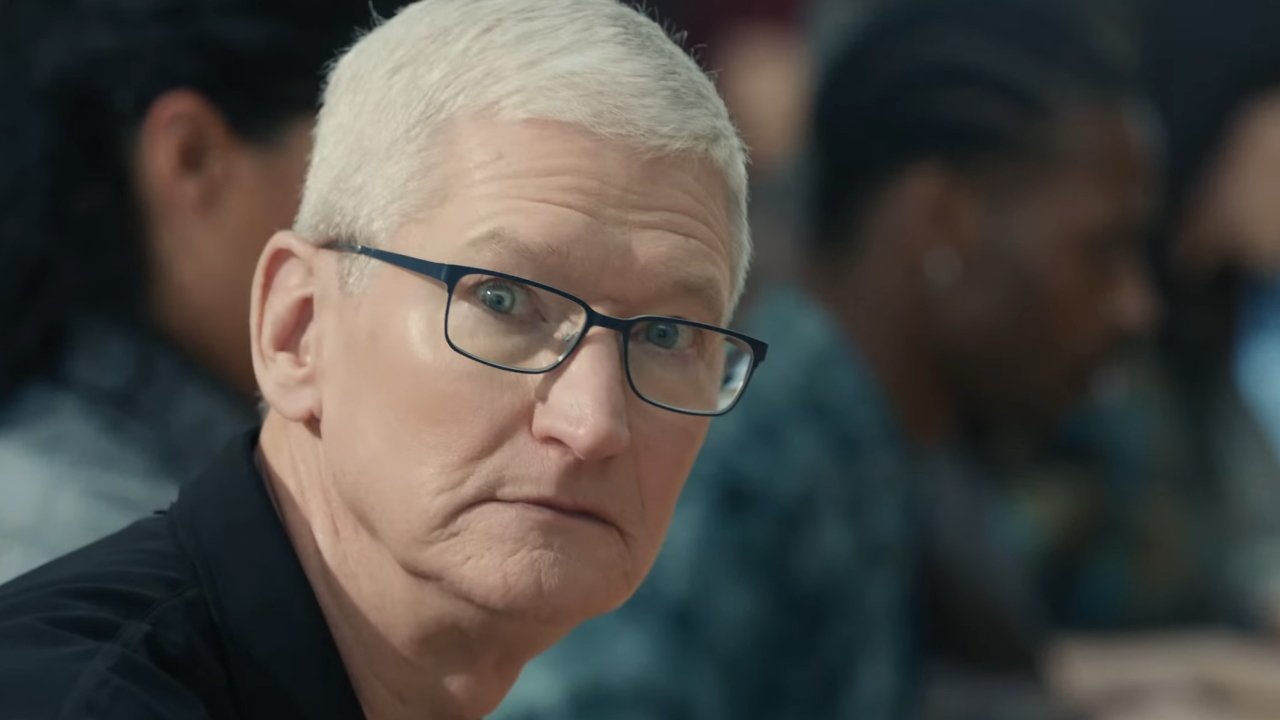
Tim Cook reportedly said he has slept "with one eye open" after his CIA briefing -- image credit: Apple
Apple CEO Tim Cook lost sleep after the CIA briefed him years ago that China would move on Taiwan by 2027. With that day approaching, not enough has been done about it.
Apple has been reshoring some manufacturing to the US, in initiatives that have been known for years. But now according to The New York Times, Apple and others also had a classified CIA briefing that warned how precarious chip manufacturing is in Taiwan, but have failed to heed it.
Tim Cook from Apple, Jensen Huang of Nvidia, Lisa Su of Advanced Micro Devices, and Qualcomm CEO Cristiano Amon were briefed in July 2023. Following the briefing, Apple's Tim Cook is reported to have said that he slept "with one eye open."
That's a measure of how dependent Apple is on Taiwan's TSMC, and also of how persuasive the briefing was. The briefing reportedly focus on how China's military spending indicated an attack was possible.
Yet according to the report, none of the technology leaders took the hint and moved production away from Taiwan in any significant numbers. There are reasons, including the estimate that if the US were able to manufacturer sufficient processors, they would cost around 25% more than ones from Taiwan.
The sheer scale of dependence on TSMC makes it hard to accept that could change. Also, for Apple, there are the vast challenges associated with bringing manufacturing back to the US, with its lack of skilled labor, shortage of rare earth minerals, and the general unwillingness of the US labor force to accept minimum wage for a high-skilled job.
In October 2022, TSMC said US attempts to rebuild a semiconductor industry were doomed to failure. Naturally, TSMC and Taiwan don't want to see sales move to the US, but then there was also what's called the "silicon shield."
This is an argument that the US is so dependent on Taiwan that it would protect the country should China attack.
It's not just the US, either. Taiwan is crucial to the entire world's economy. In 2022, ahead of the briefing to the technology leaders, the US government calculated that Taiwan was key to around $10 trillion of the world's gross domestic product.
The confidential report with that figure also said that were China to take over Taiwan, the US gross national product would drop by $2.5 trillion. But then China's would fall by $2.8 trillion.
That expected damage to the Chinese economy may also have persuaded business leaders that the country would never attack Taiwan. But then in February 2022, Russia invaded Ukraine despite predictable economic losses.
Economic crisis
There is certainly a logic to the "silicon shield" idea, to the problems of reshoring manufacturing, and of whether China could afford to attack Taiwan. But should China attack, it would present the largest economic crisis since the Great Depression.
Reportedly, many of the largest US technology firms would have sufficient supplies of processors to wait out some months of conflict. But Apple may not — it famously operates on a very tight Just In Time process, meaning it holds at most 30 days stock of components.
Apple's moves
As most recently announced, Apple is working to bring Mac mini assembly and fabrication to the US. Apple has also always invested in the US, but most recently boasted about spending $600 billion in the country.
That investment, though, is trivial next to what would be needed — and it was also as much PR as anything else. Tim Cook announced this and other manufacturing investments in a clear move to appease Trump.
But then in truth, little of the investment was actually new. Pretty much all of the reported investment was what had previously been announced separately.
Trump (left) has been pressing Tim Cook (right) to move manufacturing back to the US
It is a series of good investments, bundled up to look better. That did appease Trump, it did do the job it was intended to.
But it isn't enough to mean Apple is really any closer to being less reliant on Taiwan.
At the same time as Apple announcing a commitment to US investing, though, TSMC itself has done the same. By January 2026, TSMC was investing $165 billion in the US.
That was on its series of fabrication plants that have been built in Arizona, and the company is planning a least one further factory. At present, though, the processors that can be manufactured in Arizona can not be as complex as ones made in Taiwan, or use the newest fabrication technologies, because of Taiwanese law.
There have also been reports that processors made in Arizona still have to be shipped back to Taiwan for finishing. Ultimately, that may change because of Apple's partnership with Amkor with a timetable measured in years for the shift, not months.
So if China attacked Taiwan and came into conflict with the US, TSMC's Arizona plants will not ease the situation.
Apple has yet to comment publicly on The New York Times report. And, it probably won't say anything of any substance when it does.
China's position
The issue for China is that its government insists that Taiwan is part of its territory, while Taiwan's officials disagree. This has led to incidents such as China blocking shipments of Apple components if they were labelled "made in Taiwan" instead of "Taiwan, China."
The US does not formally recognize Taiwan as a sovereign state. That has led to Apple supplier TSMC being taxed twice over revenues from its Arizona plants.